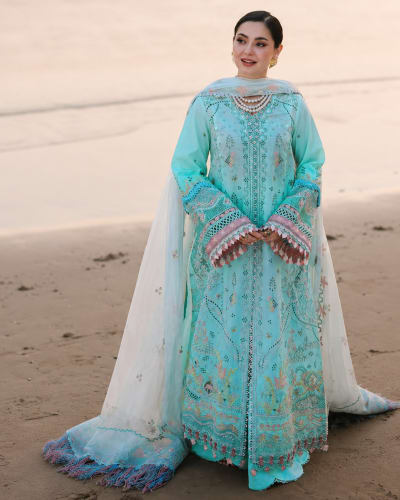
Getting an Unstitched Suit Stitched: A Tailor Checklist
What to check before you hand an embroidered unstitched suit to your tailor: pieces, measurements, embroidery placement, and timing before wedding season.
An unstitched suit is only as good as the tailoring. Most of the disappointment people have with them comes from a handful of small misunderstandings at the tailor's counter, not from the fabric. An embroidered panel ends up on the back, the patches are forgotten in the bag, or the shirt is cut shorter than you wanted. This checklist is meant to prevent that.
1. Open the packet at home first
Before you leave the house, lay everything out and check what you actually have. A typical three-piece suit contains:
- Shirt fabric, often with a separately embroidered front panel, back and sleeves.
- Trouser fabric, plain or with an embroidered border.
- A dupatta or a shawl. Many winter suits now come with a big shawl instead of a regular dupatta.
- Extras: embroidered patches, borders or lace for the neckline, sleeves or daman.
Read the product description again and match each piece against it. If something is missing, you want to know before the fabric has been cut, not after.
2. Decide where every embroidered piece goes
This is the step that goes wrong most often. Before the tailor cuts anything, point to each embroidered piece and say where it belongs: front panel, back, sleeves, neckline patch, border on the daman or on the trouser hem.
Extra patches are a choice, not an instruction. You can put them on the sleeves, around the neckline, or keep the suit simpler and save them. Decide this yourself rather than leaving it to the tailor.
3. Bring a kameez that fits well
Measurements are useful, but nothing beats handing over a shirt that already fits the way you like. Tell the tailor which parts to copy exactly and which to change: "same chest, but two inches longer" is far clearer than a list of numbers.
If you are giving measurements, take them in inches with a soft tape: chest, waist, hips, shoulder, sleeve length, armhole and shirt length. For the trouser, give waist, hip, length and bottom (paincha) width.
4. Choose the trouser style before cutting
A traditional shalwar uses noticeably more fabric than a straight trouser or cigarette pant. If the suit comes with an embroidered trouser border, ask whether your chosen style will leave enough fabric for it to sit properly at the hem. If you want a wide shalwar and there is not enough fabric, a straight trouser is the safer choice.
5. Ask about lining and finishing
Winter fabrics such as karandi can feel rough against the skin, and lighter embroidered fabrics may show what is underneath. A soft cotton lining in the shirt solves both. Ask, too, how the neckline and sleeve edges will be finished. Piping or a small lace edge can make a mid-priced suit look far more expensive.
6. Ask about pre-washing
Cotton-based fabrics can shrink slightly on their first wash. Ask your tailor whether your fabric should be soaked or washed before cutting. Most tailors have an opinion based on the fabric in front of them, and it is a two-minute conversation that can save a shirt that ends up an inch too tight.
7. Book early in wedding season
Tailors in every city are overloaded in the weeks before Eid and through the winter wedding season. A suit that takes a week in October can take three in December. If you need an outfit for a particular date, hand it over at least two to three weeks before, and ask for a trial fitting so there is time to fix anything.
8. Check it before you pay
When you collect the suit, try it on in the shop if you can. Check the length, the sleeve length, how the embroidery lines up at the seams, and whether the neckline sits flat. Small alterations are easy on the spot and annoying to come back for.
A note on choosing the suit itself
If you are still deciding between fabrics, our guide to dhanak, khaddar and karandi explains which one suits work, visiting and weddings. The full winter range is in unstitched fabric, and every suit ships with cash on delivery anywhere in Pakistan.