Do You Need Sunscreen in Winter in Pakistan?
Winter sun in Pakistan is weaker but not harmless. What SPF and PA ratings mean, how much to apply, and how to fit sunscreen into a cold-weather routine.
Most people put their sunscreen away in October. It feels sensible: the days are shorter, the sun feels gentle, and in Lahore or Islamabad there are weeks when you barely see it through the fog. But your skin does not stop getting sun just because you stopped feeling the heat.
How strong is the winter sun here?
It is weaker, but it varies a lot by city. In Lahore, the peak UV index in December and January is around 3, which is in the moderate range. In Karachi it stays higher, around 5 to 6 at midday in winter, which is enough to cause damage over a few weeks of daily exposure.
Two other things are easy to forget. Clouds and haze block less than they seem to. The American Academy of Dermatology notes that up to 80% of UV rays can get through cloud cover. And the UVA rays responsible for tanning, pigmentation and ageing pass through ordinary window glass, so a daily commute by the car window counts.
Who should keep wearing it
- Anyone with melasma, dark spots or post-acne marks. UV keeps pigmentation going, and even a few unprotected weeks can undo months of progress.
- Anyone using vitamin C, exfoliating acids or retinoids. These treatments work better, and irritate less, with daily sun protection.
- People outdoors at midday: school runs, rooftop chores, driving, outdoor work.
- Everyone in Karachi and the south, where the winter UV index is still high.
Reading the label: SPF and PA
SPF measures protection against UVB, the rays that cause sunburn. Dermatologists generally recommend SPF 30 or higher for daily use. Going from SPF 30 to 50 adds a little extra protection, but applying enough matters far more than the number.
PA is a rating, originally from Japan, for protection against UVA, the rays behind tanning and pigmentation. More plus signs mean more protection: PA+ is low, PA++ moderate, PA+++ high, and PA++++ the highest. If you are treating pigmentation, look for PA+++ or above.
"Broad spectrum" means the product claims to cover both UVA and UVB. If a sunscreen lists SPF but says nothing about UVA, PA or broad spectrum, check the box or ask the seller before relying on it for pigmentation.
How much and how often
Most people apply about half of what they need. For the face and neck, a common rule of thumb is two finger-lengths of sunscreen. Apply it as the last step of your morning routine, about 15 minutes before you go out.
If you are outside for long stretches, reapply every two hours, or after sweating. For a normal day of home, car and office, one generous morning layer goes a long way. Many people also keep a small tube in their bag for a top-up after lunch.
Fitting it into a winter routine
Winter skin is usually drier, and that changes which sunscreen feels comfortable. A thin, watery sunscreen that suited you in June may now feel tight. A moisturiser that already contains SPF, or a creamier sunscreen, often works better from November to February.
A simple morning routine:
- Gentle face wash, or just water if your skin is very dry.
- A serum if you use one. Vitamin C in the morning pairs well with sunscreen.
- Moisturiser, if your sunscreen is not moisturising enough on its own.
- Sunscreen or an SPF day cream, generously applied.
Don't forget your lips. They burn and chap in winter sun too. The American Academy of Dermatology suggests a lip balm with SPF 30 when you are outdoors.
What is on PakShop
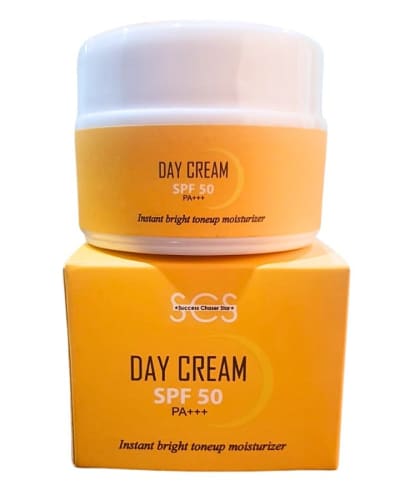
The SCS Day Cream lists SPF 50 and is designed as a daily morning moisturiser, which suits dry winter skin well. Check the packaging for its UVA rating if you are treating pigmentation. You can browse the rest of the range under sunblock and serums.
The short version: if you are rarely outdoors and do not have pigmentation concerns, winter is the season you can relax a little. Everyone else should treat sunscreen the way they treat a face wash, as something done every morning without thinking about the weather.
Products in this guide